Ben Kiger Millwork logo Ben Kiger Millwork American Family Hardwood Co. · est. 2012 Commission a piece
Handmade hardwood cutting and serving boards by Ben Kiger Millwork

Handmade hardwood · Williamstown, WV

Handmade Wood Cutting & Serving Boards

Every wood cutting board I make is built one at a time, by hand, by me — milled from rough-cut hardwood I hand-pick myself, on the banks of the Ohio River in West Virginia. No machine line, no two alike, and every board guaranteed for life. A good board should take years of daily use and still be beautiful enough that you hesitate to cover it with food. Mine do both.

What makes a good wood cutting board?

A good wood cutting board is made from a dense, closed-grain hardwood — maple, walnut, or cherry — and finished with a food-safe oil. End-grain boards are gentlest on knives and last longest; edge-grain boards are lighter for everyday use. Mine are hand-milled and guaranteed for life.

Two ways to build a board

End-grain vs edge-grain cutting boards

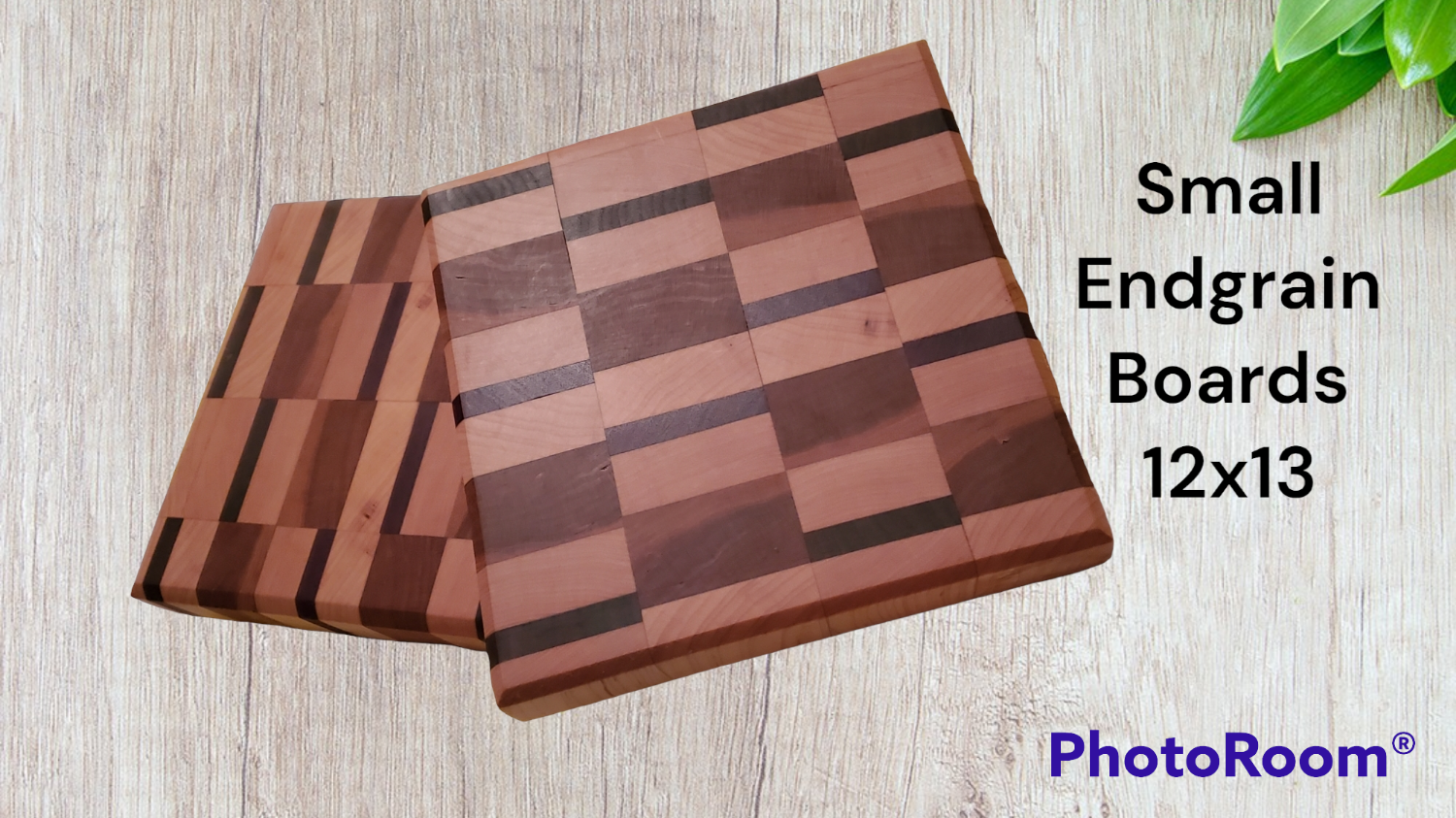
End-grain cutting boards stand the wood fibers on end so your knife slips between them — gentlest on the blade, longest-lived. The checkerboard pattern you see on a quality butcher block is end-grain. It self-heals light cuts over time.

Edge-grain cutting boards are lighter, lower-cost, and the everyday workhorse. The wood runs lengthwise, which makes for a strong, stable board that handles daily prep work without complaint.

I build both. The right choice comes down to how you cook and how much weight you want in your hand.

End-grain hardwood cutting board showing checkerboard wood pattern
Edge-grain hardwood cutting board in walnut and maple
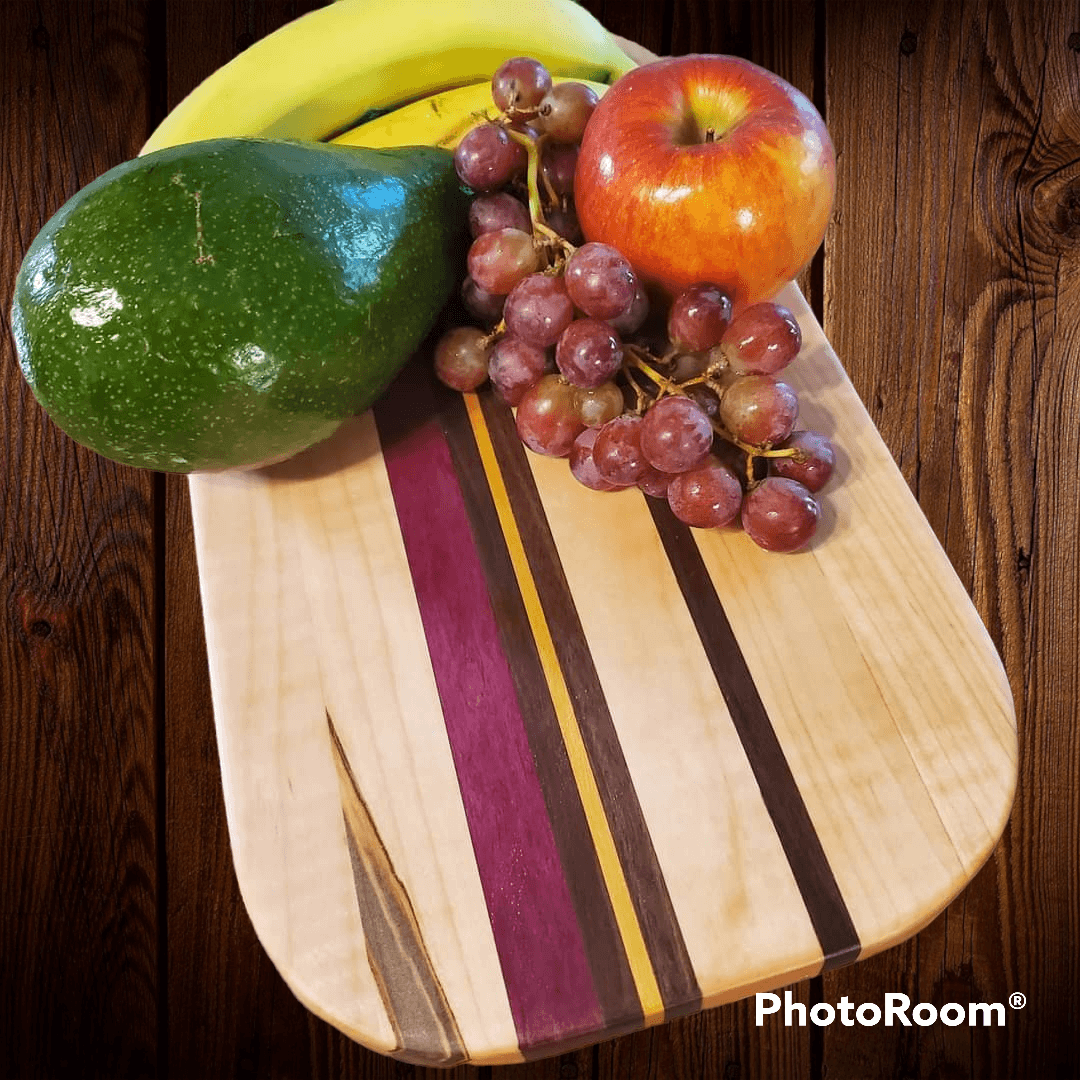
Handmade hardwood cutting board showing walnut and maple grain

Hand-picked from my own rack

The hardwoods I use for cutting boards

I work in hand-picked Black Walnut, Cherry, Hard and Curly Maple, Ash, Beech, and Chestnut, plus exotics like Purpleheart, Yellowheart, and Padauk when you want a board that turns heads.

I mill the lumber myself and choose each board for grain and color. No two boards are alike — the figure in the wood makes that guarantee easy to keep.

  • Black Walnut
  • Cherry
  • Hard Maple
  • Curly Maple
  • Ash
  • Beech
  • Chestnut
  • Purpleheart
  • Yellowheart
  • Padauk

Not sure which wood? How I'd choose →

Built to be seen

Charcuterie & serving boards

Wood charcuterie and serving boards spend as much time on the table as in the kitchen, so I pick the most striking pieces — figured maple, rich walnut, a flash of purpleheart. They hold their own as a centerpiece.

They also make the handmade gift people remember. Wedding, housewarming, anniversary — a board like this doesn't end up in a drawer.
Hardwood charcuterie and serving board with natural grain
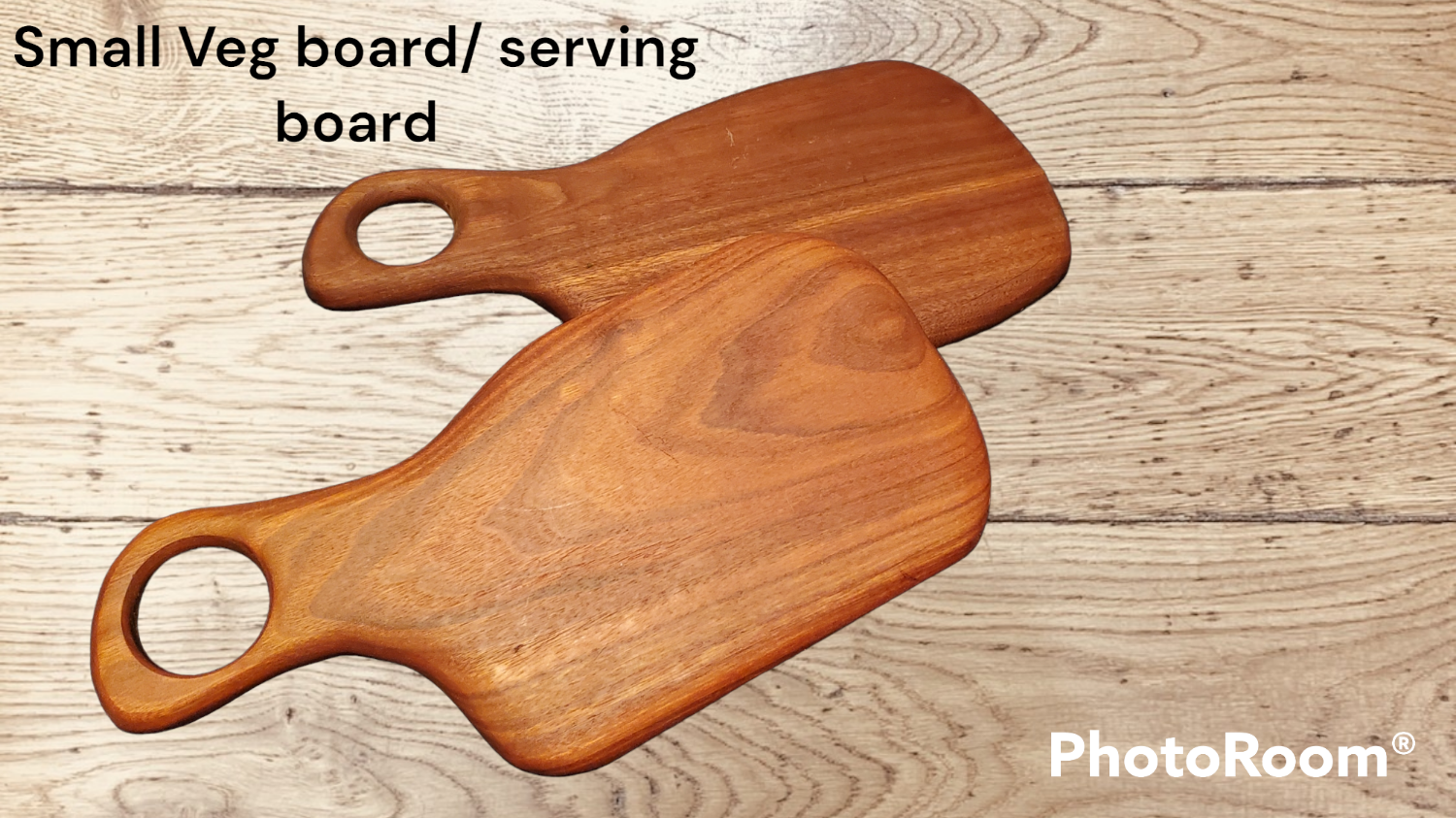
Custom hardwood serving board in walnut

Made to your spec

Custom & personalized cutting boards

Tell me the size, the wood, and how you'll use it, and I'll build it. Every board is made to order — I don't keep inventory, I keep standards.

Want initials or a date engraved for a personalized cutting board gift? I do that too. Name, a wedding date, a special message — these are the details that make a gift into an heirloom.

What to expect

Cutting board prices & how to order

Most boards run $45–$105 depending on size, wood, and grain. End-grain costs a bit more than edge-grain because it takes more material and time to build.

I quote you exactly before I start — no hidden fees, no surprises. Once you approve it, I build it. Then I ship nationwide; I've sent boards from Florida to Arizona.

To order: start a commission below and tell me what you're after. A day or two and I'll have a quote back to you.

Keeping it beautiful

How to care for your cutting board

Looked after, a hardwood board lasts decades. I include care instructions with every order, but the short version: rub it with food-safe board oil every few months and keep it out of the dishwasher. The wood will reward you for it.

And if anything ever goes wrong with something I made — a crack, a loose joint, anything — I'll make it right. That's what the guarantee means.

Full care guide →

Start your order

Commission a custom board

Tell me the wood, the size, and what it's for. I'll quote you exactly and build it one at a time, by hand. Ships anywhere in the country.

01

Tell me what you have in mind

02

I send an exact quote — no surprises

03

I build it and ship it to your door

or call (602) 317-6383

Common questions

Cutting board FAQ

What wood do you use for cutting boards?

I use domestic hardwoods I mill myself — walnut, cherry, maple, ash, beech, and chestnut — plus exotics like purpleheart and padauk on request. Every wood I use is dense, closed-grain, and food-safe. I hand-pick each board for grain and color.

Should I get an end-grain or edge-grain cutting board?

End-grain is gentlest on your knives and lasts the longest, because the blade slips between standing fibers instead of cutting across them. Edge-grain is lighter and more affordable, and makes a great everyday board. I build both, so it comes down to how you cook.

Can you personalize a cutting board?

Yes — I can engrave initials, a name, or a date, which makes these popular as wedding, housewarming, and anniversary gifts. Tell me the occasion and I'll help you choose the right board and wood.

How much does a custom cutting board cost?

Most boards run $45 to $105 depending on size, wood, and whether it's end-grain or edge-grain. I give you an exact quote before I start any work, with no hidden fees.

Do you ship cutting boards nationwide?

Yes — I ship across the country and have customers from West Virginia to Florida, Georgia, and Arizona. If it's a gift, tell me the date and I'll time it.

Made one at a time, in West Virginia

A board you'll use every day and keep for life